A tray holds 12 chips, five marked for calibration. You randomly take three chips and keep each one out of the tray. What is the chance that exactly two of the three are marked?
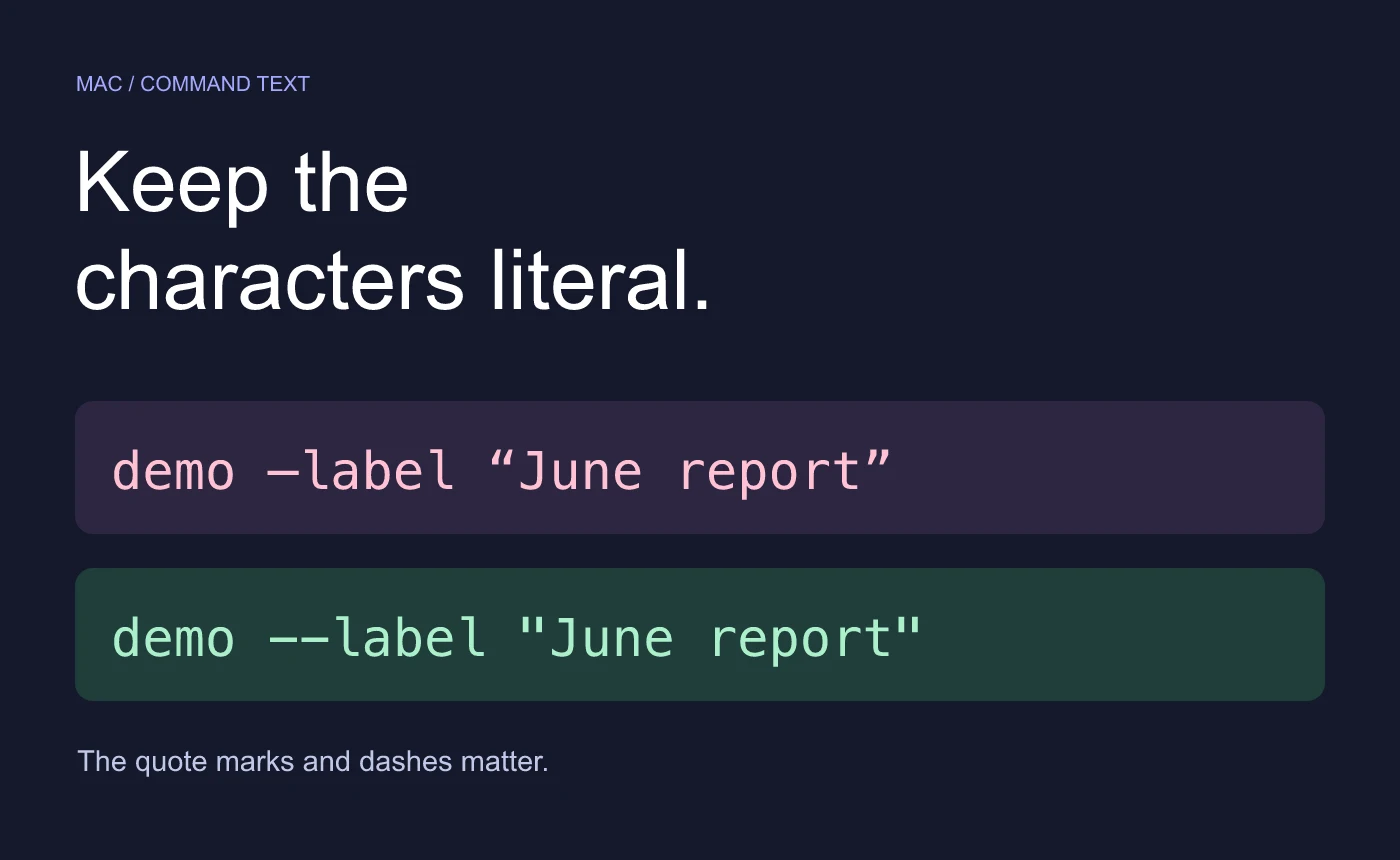
Enter 2 in B2 for marked chips in the sample, 3 in C2 for sample size, 5 in D2 for marked chips in the tray and 12 in E2 for total tray size. In F2, use =HYPGEOM.DIST(B2,C2,D2,E2,FALSE). FALSE asks for exactly two. Expect about 31.82%.
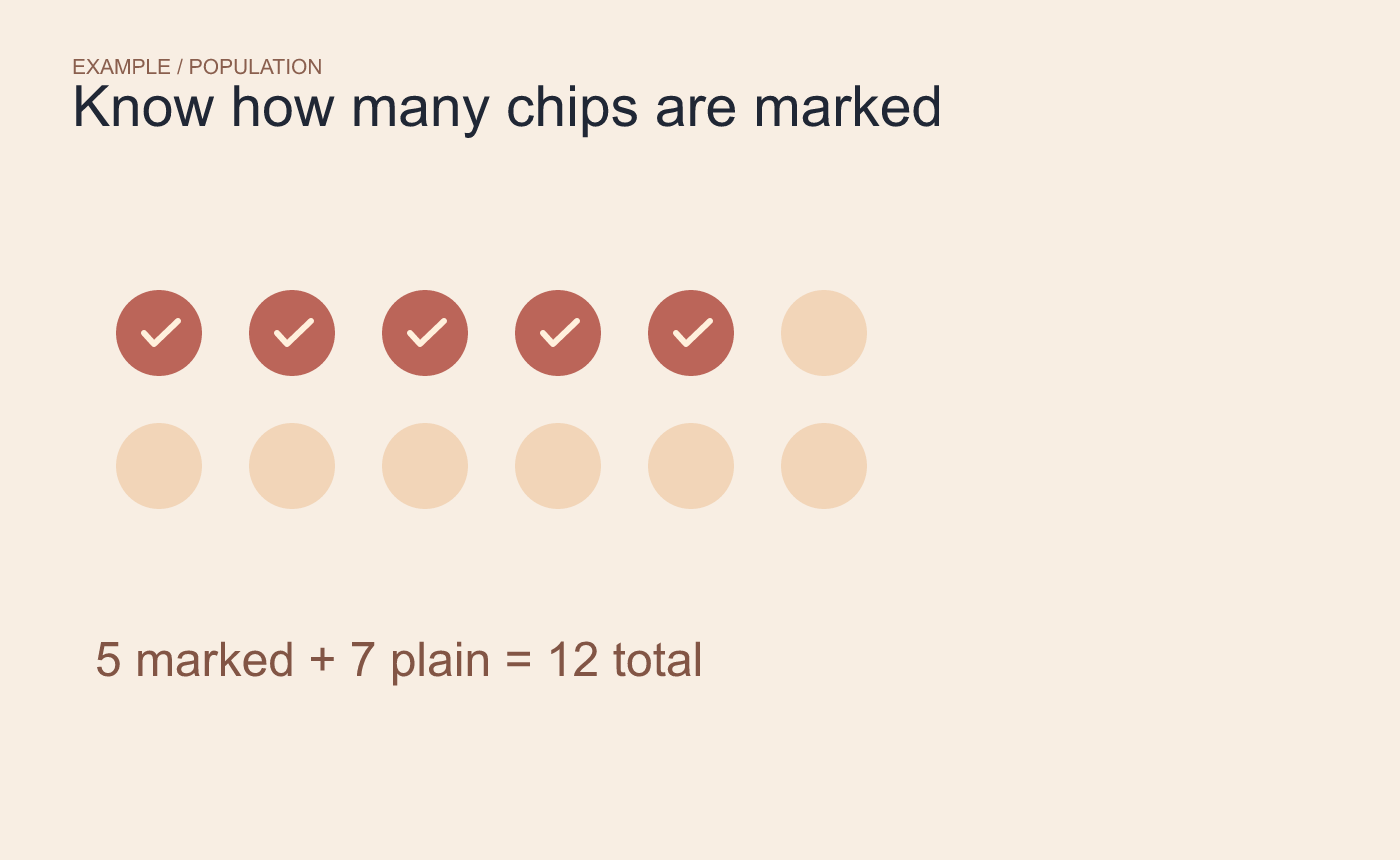
Example population. Keep the total and the number marked separate.
Check the numerator and denominator
There are 10 ways to choose two of the five marked chips and seven ways to choose one of the seven plain chips. That gives 70 matching samples. There are 220 ways to choose any three from twelve, so the share is 70 divided by 220.
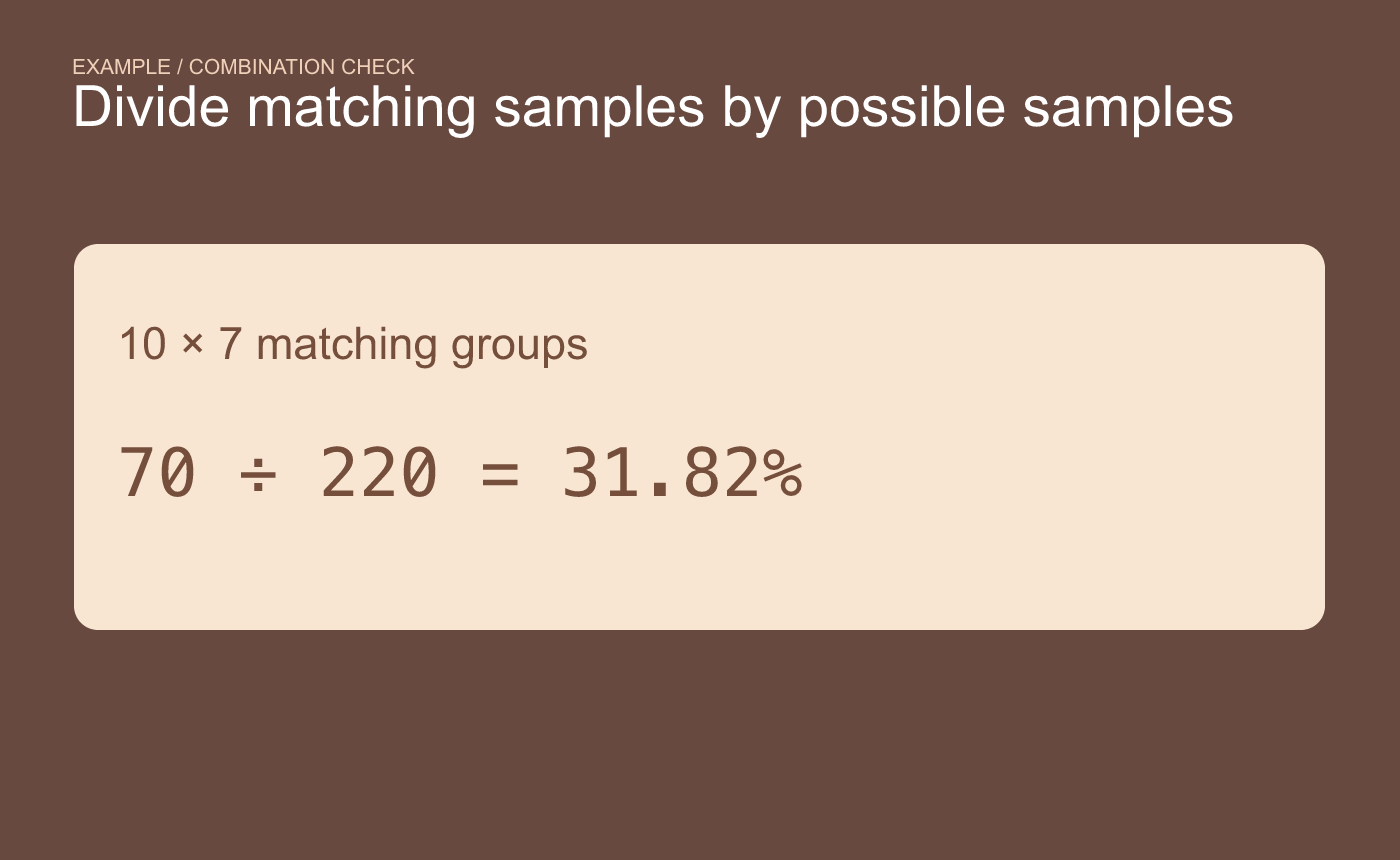
Example cross-check. Count combinations before comparing with the worksheet result.
If you need at least two marked chips, include the exactly-three case as well. Label the intended outcome beside the formula so a reviewer can check the question the result answers.