The visitor kiosk asks the gate desk for access. The desk returns a pass code when space is available and a retry message when the gate is full. Put the common request once above the two outcomes.
```mermaid
sequenceDiagram
    participant K as Visitor kiosk
    participant D as Gate desk
    K->>D: Request gate access
    alt Space available
        D-->>K: Return pass code
    else Gate full
        D-->>K: Ask visitor to retry
    end
```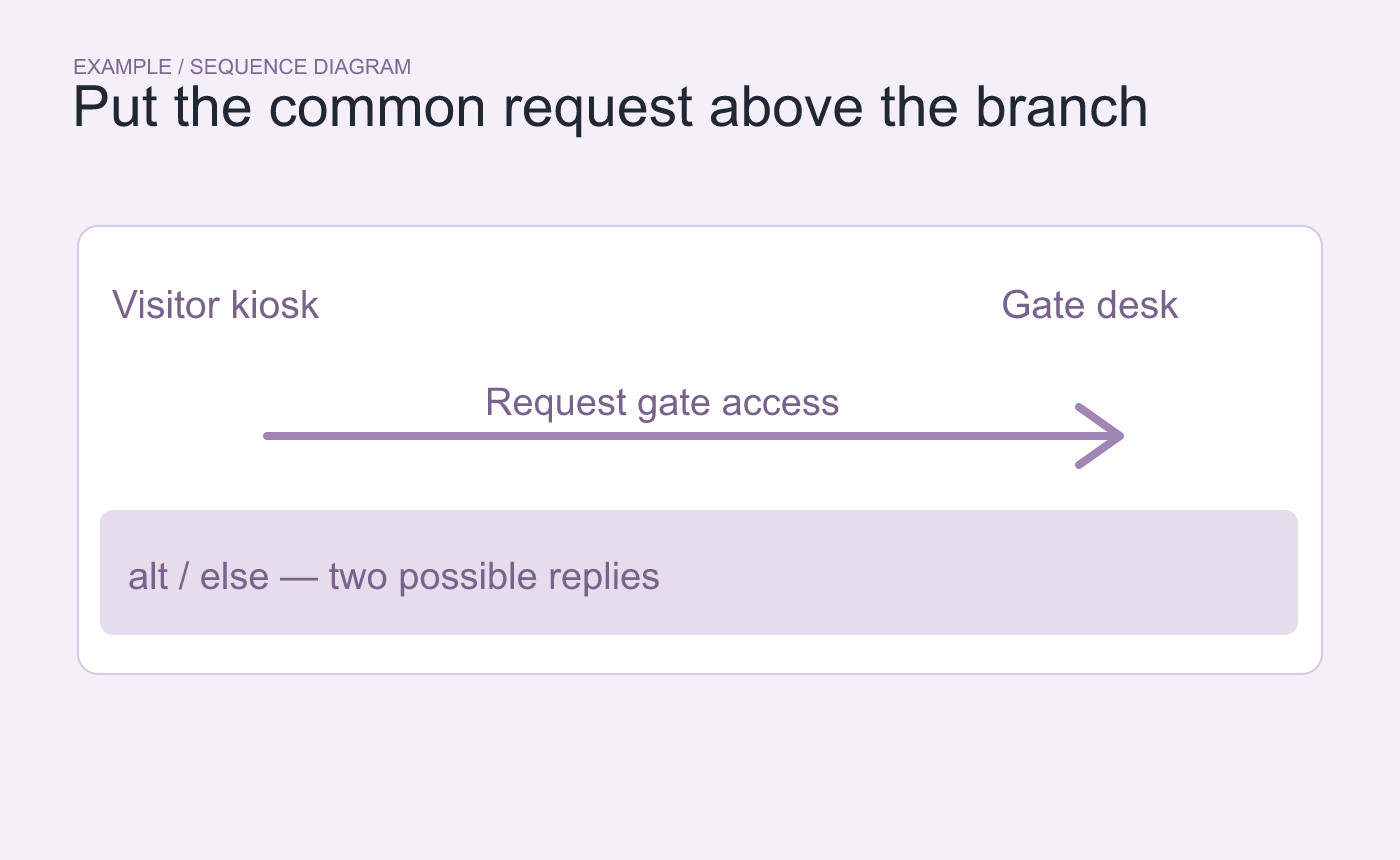
Example structure. Keep the common request outside the alternatives.
Check both branches in the destination preview
Confirm the request arrow runs from the kiosk to the desk. In each branch, confirm the reply runs back to the kiosk and appears under the matching condition. If the destination shows the fenced source instead of a diagram, check whether its Markdown renderer supports Mermaid.
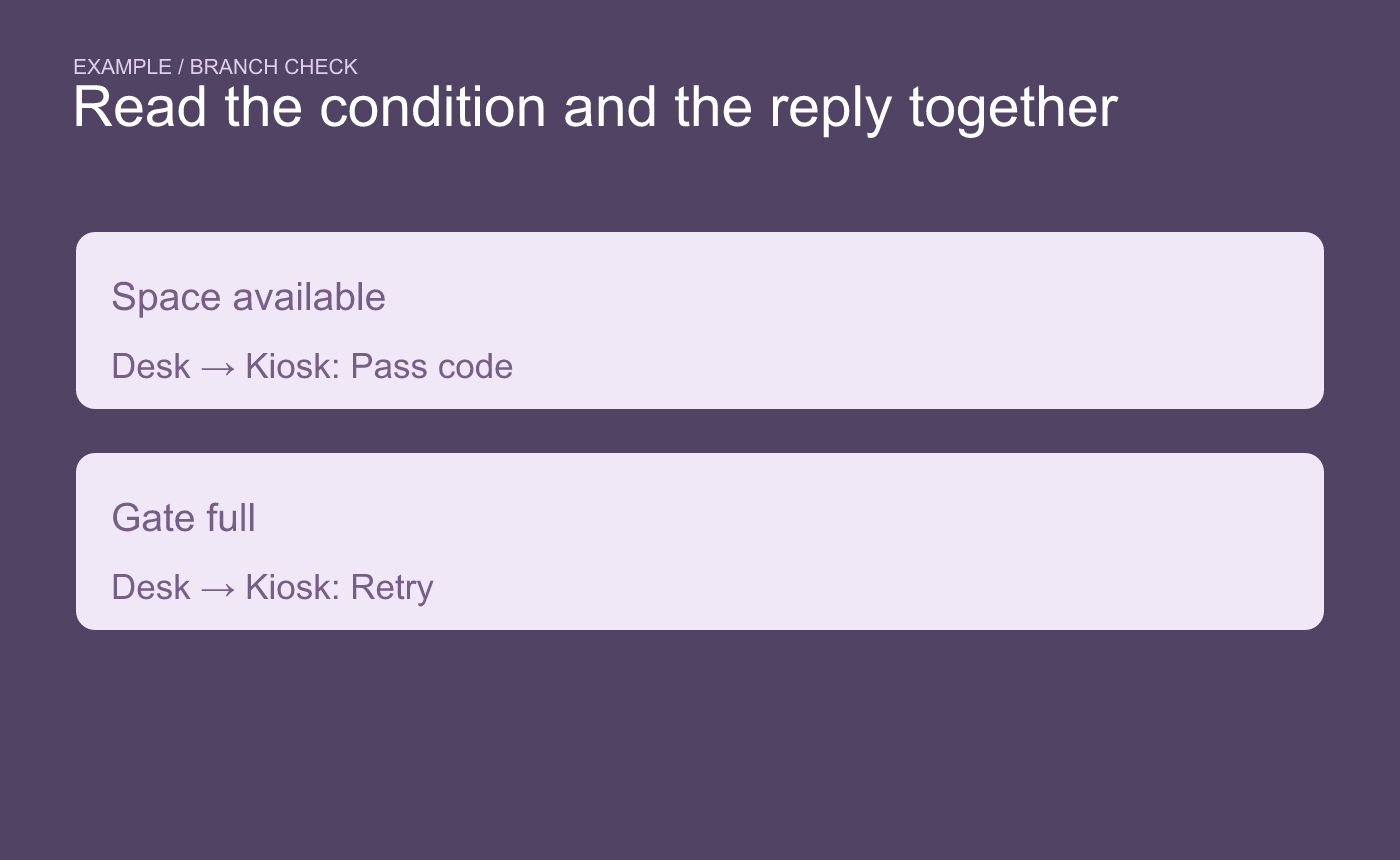
Example check. Each branch should have the correct reply and direction.
Use a branch label that describes the condition and a message that describes the reply. That keeps the diagram readable even when the two outcomes share most of their steps.