Read a long PDF with one question in view and keep notes that link each useful passage to its location. Separate exact quotations, your paraphrase and your own interpretation so you can verify them later.
A note should explain why a passage matters. Copying large sections without that explanation makes the notes harder to use than the source.
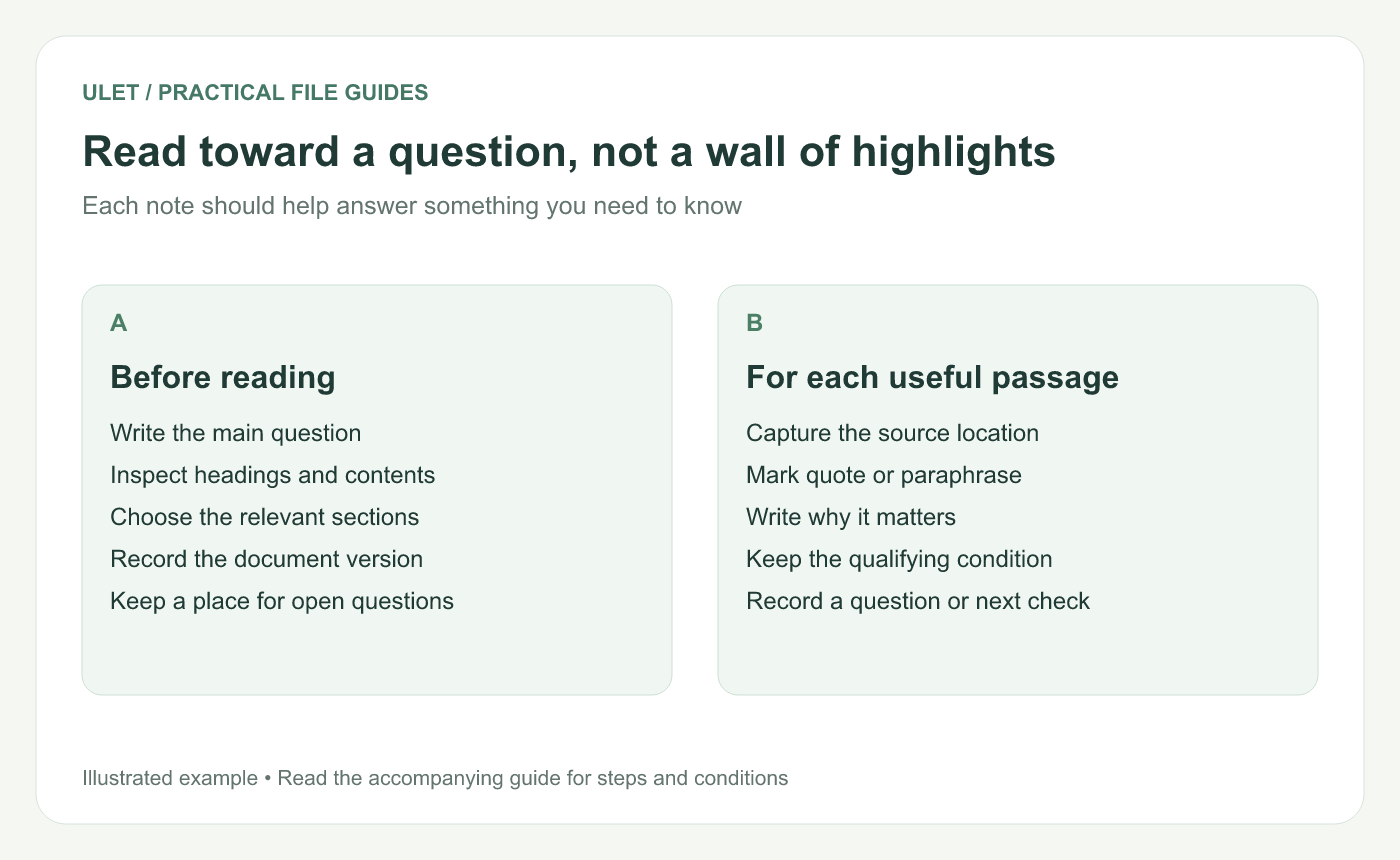
Read toward a question, not a wall of highlights. Original instructional illustration; example text and diagrams are not software screenshots.
Choose the question before the reading session
For example, ask “Which assumptions affect the proposed rollout?” Scan the contents and headings, then start with the sections most likely to answer that question.
Record the document title, version and date. If you later receive a revision, you will need to know which copy each note describes.
Use a small repeatable note
Field | What to write |
|---|---|
Location | Page label, section heading and a short content anchor |
Source passage | A short verified quotation or an identified paraphrase |
Meaning for my question | Why this passage is relevant |
Condition or limit | The scope or assumption that affects interpretation |
Next check | A question, calculation or related passage to inspect |
If a label such as A-2 differs from the viewer's physical position, record both when needed. A heading and short phrase help relocate the passage after pagination changes.
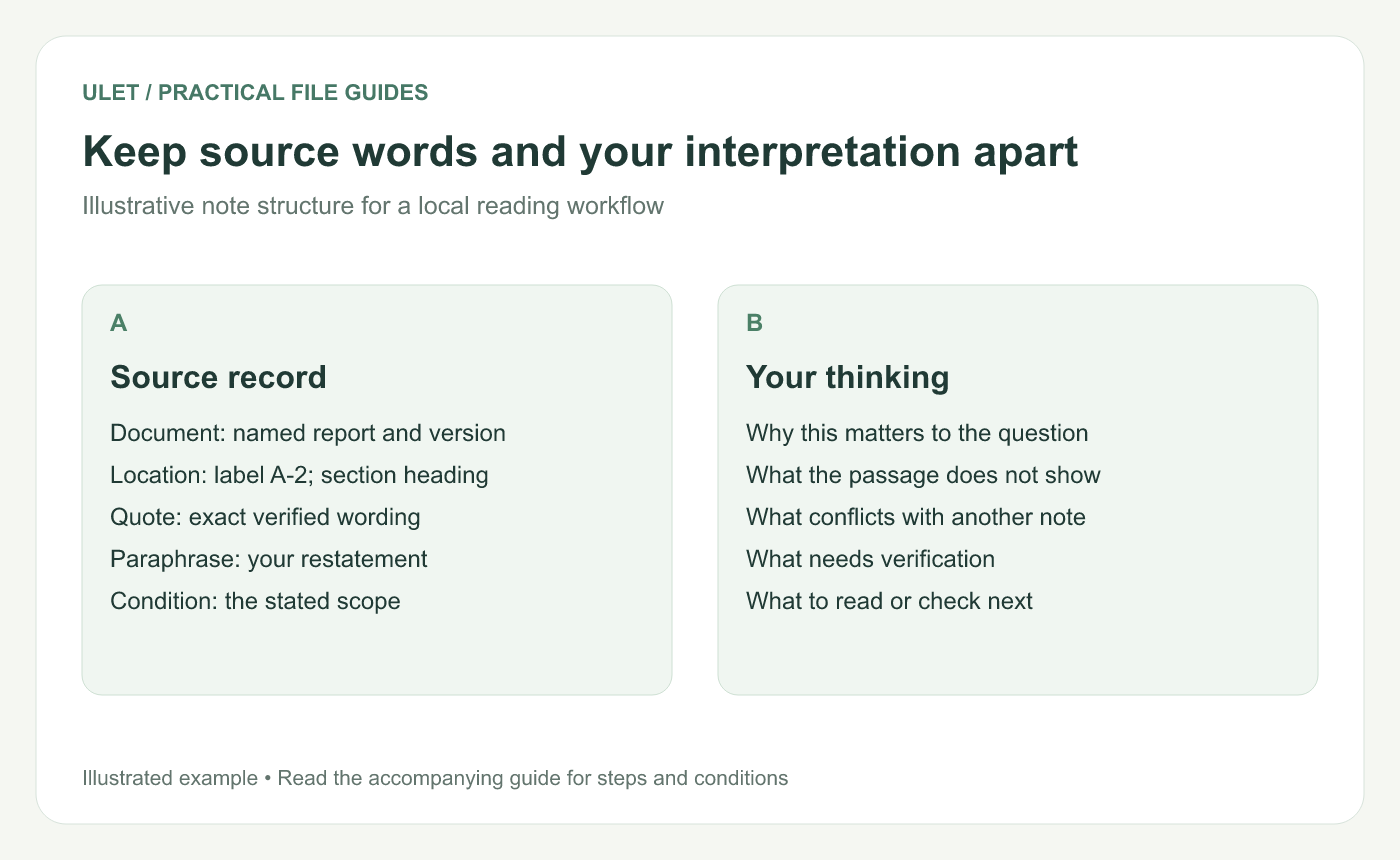
Keep source words and your interpretation apart. Original instructional illustration; example text and diagrams are not software screenshots.
Verify quotations against the page
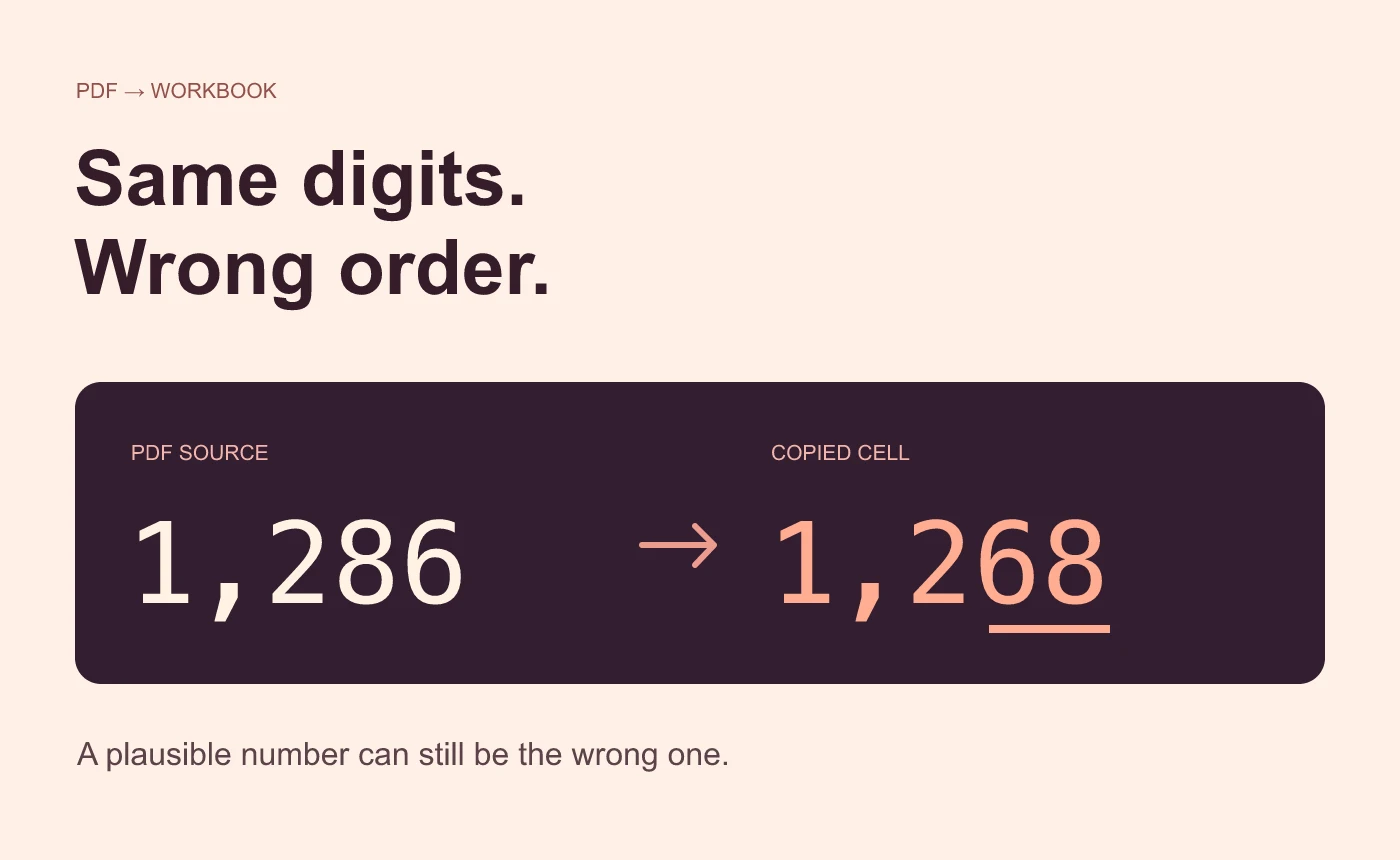
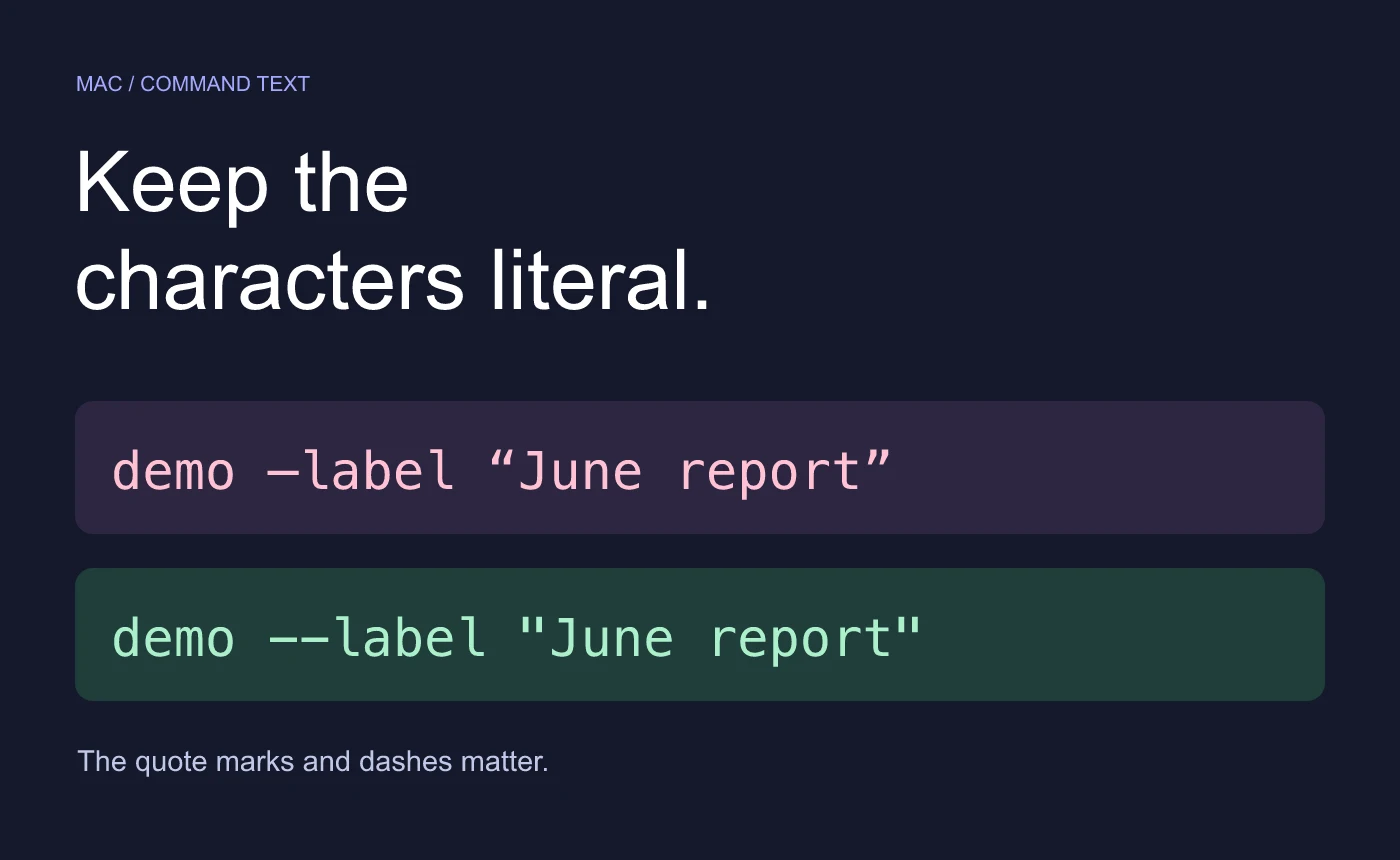
After copying a short passage, compare its words and punctuation with the visible PDF. OCR or extraction can change characters or reading order.
Use quotation marks only for the wording you verified as exact. Label a paraphrase as your restatement and keep the original source reference with it.
Write your interpretation in its own field
A report might state a condition without recommending an action. If you infer an action from it, record that as your own reasoning. This makes later review easier and prevents an interpretation from turning into a misattributed quotation.
Keep unanswered questions open. An uncertain note can be useful when it clearly says what evidence is still missing.
End with a short synthesis
After the session, write what you can now answer, what remains uncertain and which source locations support the answer. Revisit only the passages needed to resolve the gaps.
Ulet keeps local PDF reading and Markdown or DOCX notes in one app on Windows and macOS, with free basic editing. Keep the source and notes together so the references remain easy to follow when you return to the work.