Cite a source close to the claim, chart or image it supports, then give the reader enough information to find the full source. Use the citation style required by your organization, course or publisher.
For a general workplace deck without a required style, a readable short reference on the slide and a consistent source list are a practical starting point.
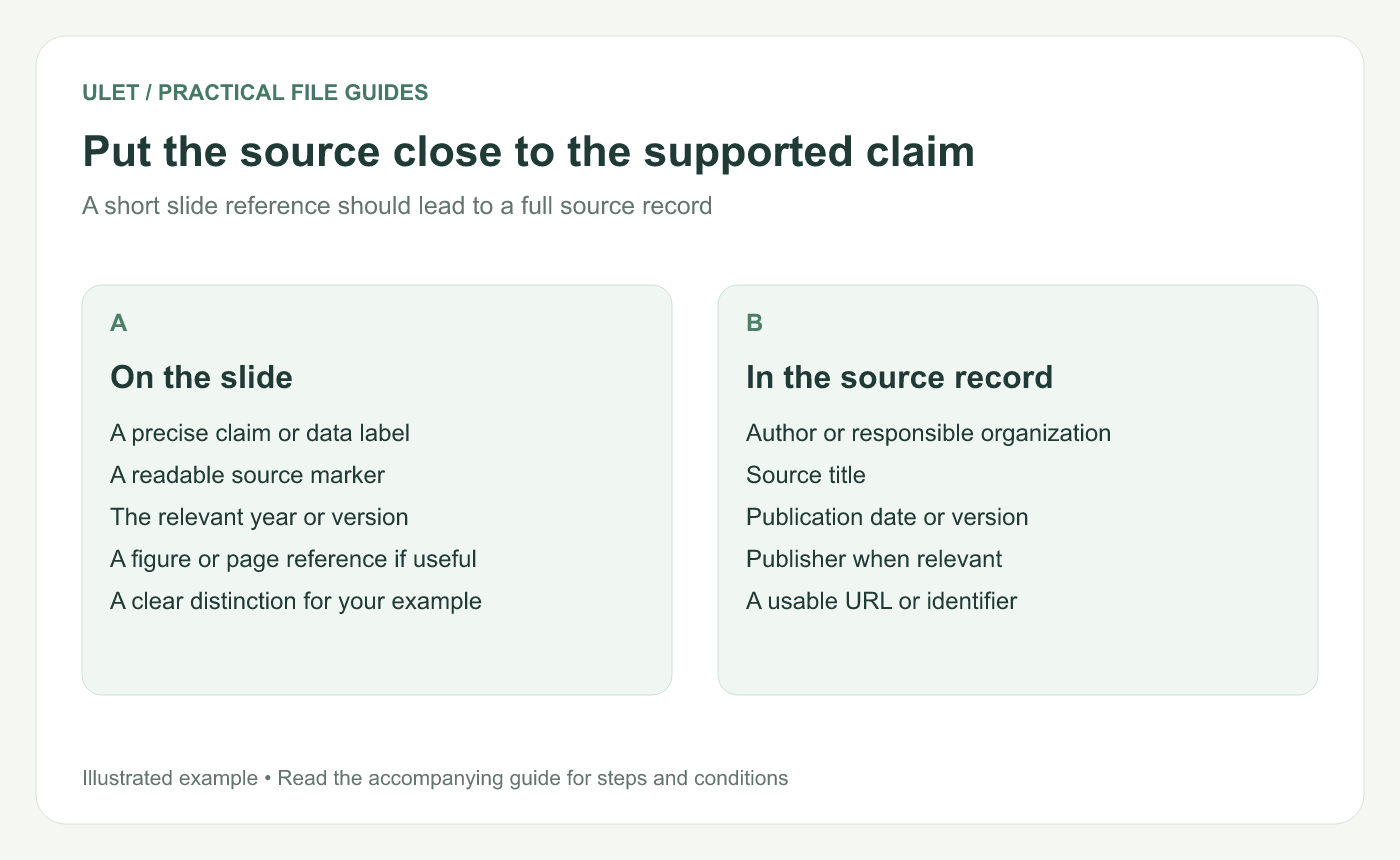
Put the source close to the supported claim. Original instructional illustration; sample records and layouts are examples, not software screenshots.
Keep a source record while you build
Record the author or organization, title, date or version and a usable URL or identifier. Add the page, table or figure when it helps locate the evidence.
MIT Libraries recommends crediting data producers and providing access information when citing data in a paper or presentation. Its suggested details include the author, title, year, publisher and access location. MIT data citation guide.
Keep this record beside the deck while drafting. A saved image filename rarely contains enough information to reconstruct where the evidence came from later.
Place the short reference where it helps
Put a source marker beside or below the supported material. For example, an illustrative placeholder might read “Source: Organization, report title, year, table 2.” Replace every placeholder before sharing.
Keep the text readable. If a full URL overwhelms the slide, use a short marker that connects unambiguously to the full reference list. Check that the list survives in the version you distribute.
Check the claim against the source
Open the original passage or table and compare the population, reporting period, units and definitions with your slide. A correct citation does not make an overstated claim accurate.
If you calculate something from source data, distinguish the published values from your calculation. Keep the method available so a reviewer can reproduce the result.
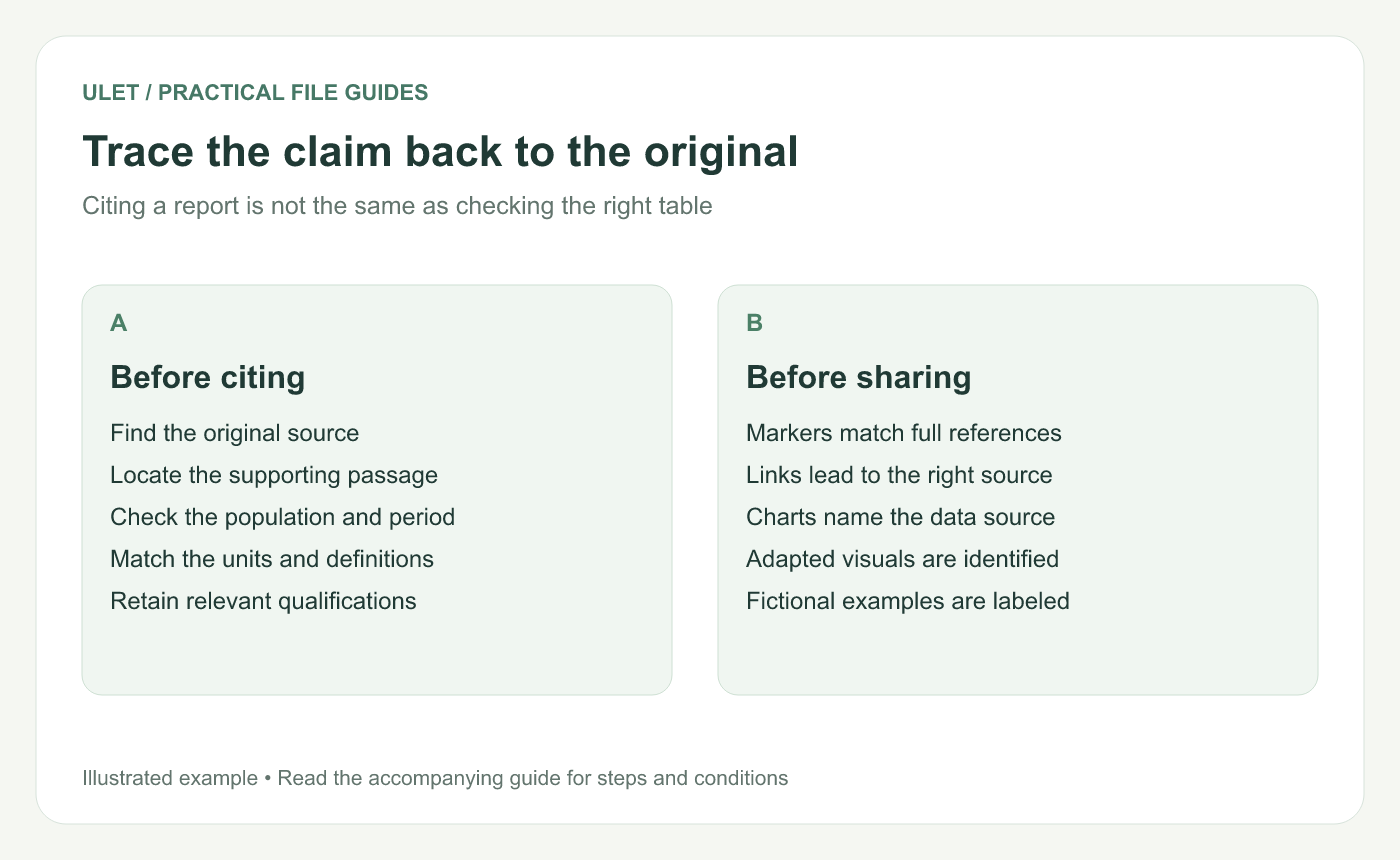
Trace the claim back to the original. Original instructional illustration; sample records and layouts are examples, not software screenshots.
Explain how a visual relates to its source
Identify a reproduced or adapted visual using the wording and credit required for that material. If you draw your own chart from published data, name the data source; if the values are fictional, label them as an example.
Do not label a diagram of an interface as a product screenshot. Describe it as an illustration so the audience can judge the evidence correctly.
Run a reference check before delivery
Match each source marker with a full reference.
Open the links and confirm the intended passages.
Check titles, dates and versions.
Remove unfinished placeholders.
Verify the distributed copy includes the source list.
You can keep the local PPTX and source notes together in Ulet. Maintain the references when revising the deck, especially when a new chart replaces an older one.