
A research summary for a non-specialist should answer the main question, explain what supports the answer and make the remaining uncertainty visible. Start with the finding the reader needs, then give enough method and context to assess it.
You can draft the summary in a local DOCX or Markdown file in Ulet. Keep the source notes available while you write.
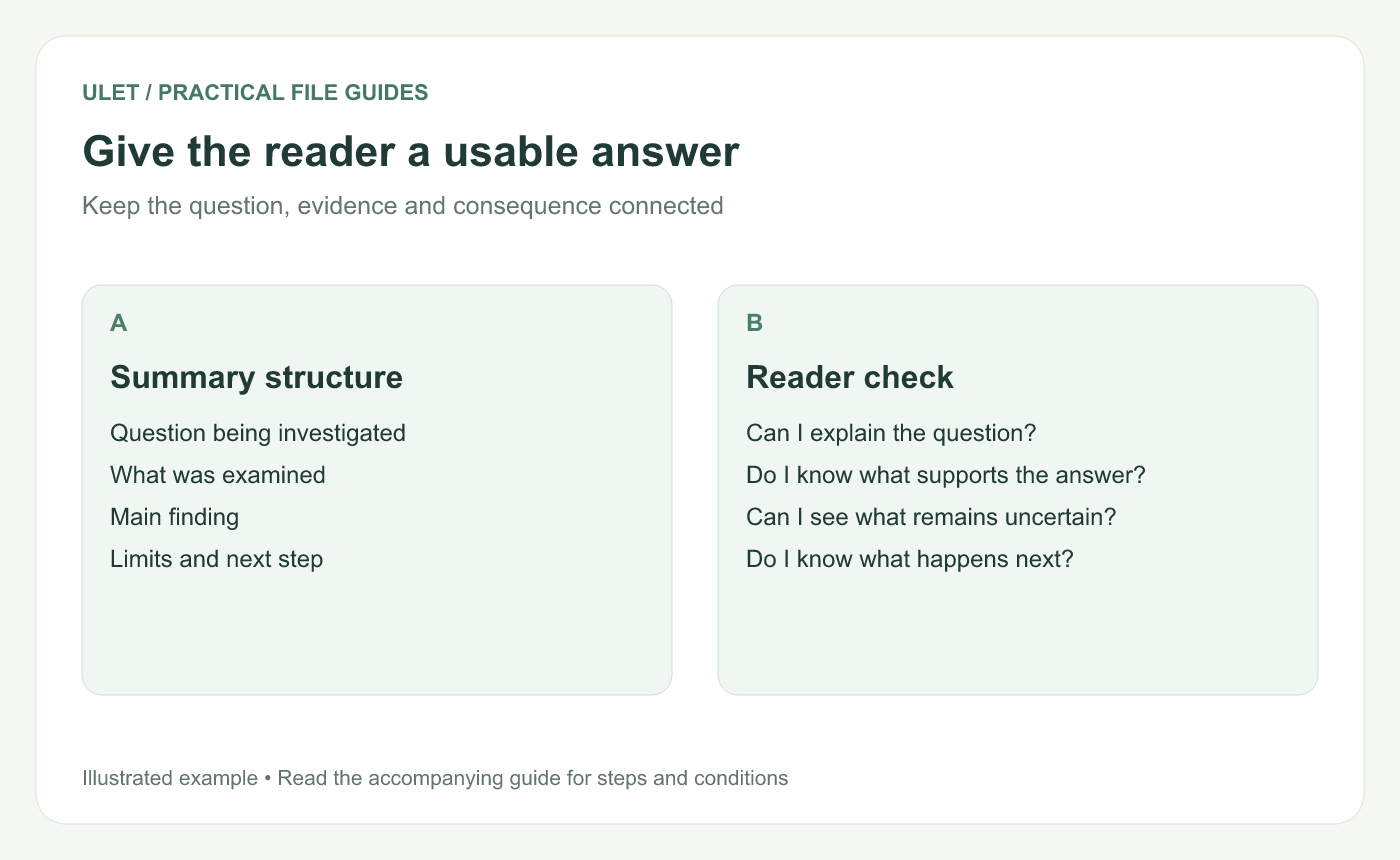
Use the evidence you actually have.
Use this small structure
Part | What the reader needs |
|---|---|
Question | The problem being investigated |
Evidence | What was examined and how it was selected |
Finding | The supported answer in plain language |
Limits | What the evidence cannot establish |
Next step | The action or further check the finding supports |
Explain specialist terms where readers first need them. Keep definitions close to the finding rather than sending readers through a long glossary before they reach the point.
Use a careful example
Imagine you reviewed a selected set of support notes and several mentioned difficulty finding an export control. That observation can support a follow-up on the instructions or label. It does not establish how common the problem is across every user.
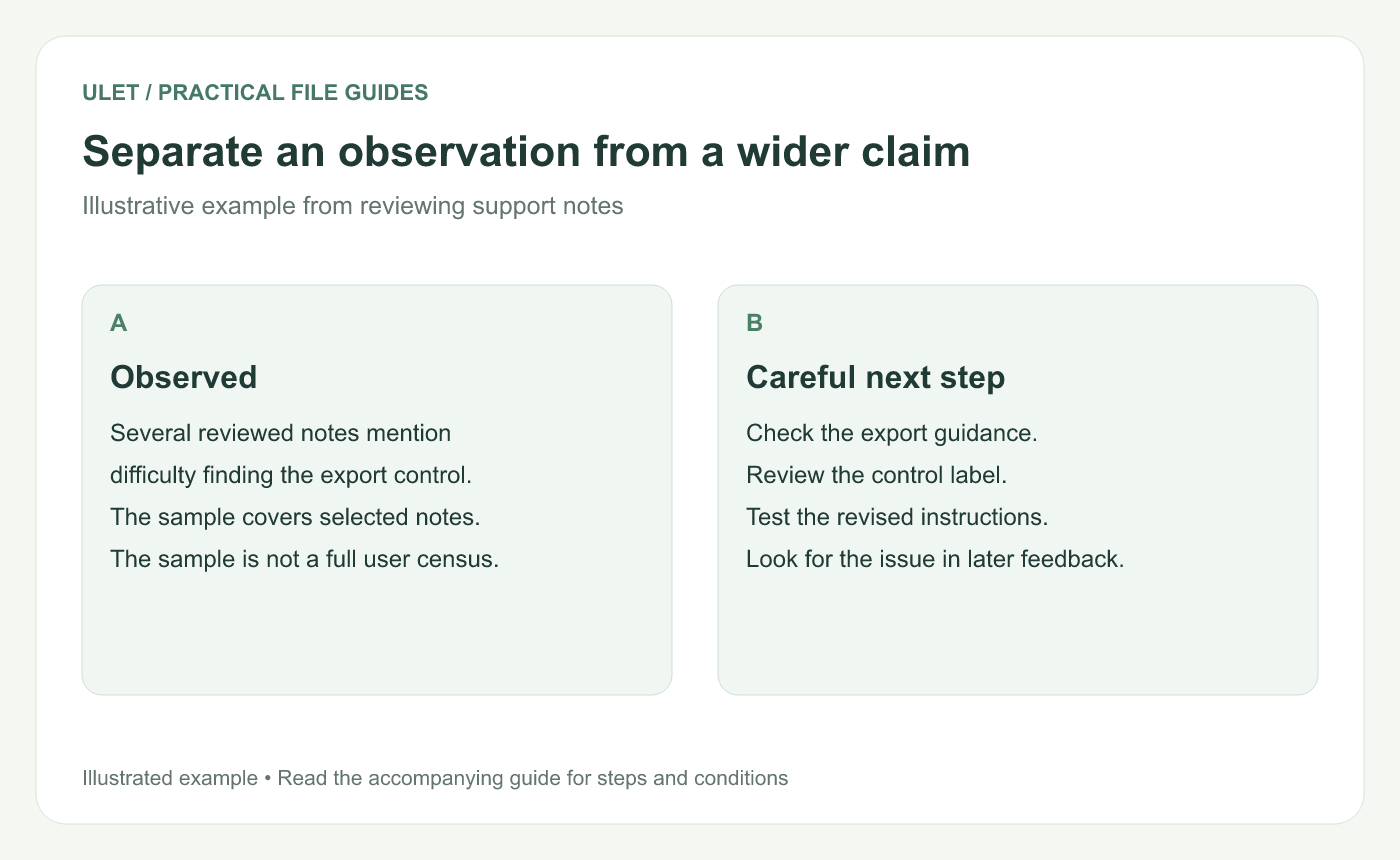
The example demonstrates wording, not a real Ulet research result.
The illustration is a writing example, not a report of actual Ulet research. In your summary, name the real source, date range and selection method.
Keep the evidence traceable
Link each important finding to the relevant source note, table or document section. Check that the source supports the exact wording you use, including any numbers and comparisons.
Write a limit in terms the reader can understand. “The review covers selected support notes from this month” is more useful than a vague warning that more research is needed.
Close with an appropriate next step
Suggest the action the evidence can reasonably support. When the finding is preliminary, a small follow-up check may be the most useful next step. Name the owner and expected output if the summary is meant to start work.
Before sharing, ask someone outside the specialty to explain the question and finding back to you. Use their questions to find unclear wording. Prepare the summary in Ulet.


