
Write survey questions with one idea at a time, concrete wording and an explicit response instruction. Check that the answer options fit the question before distributing the questionnaire.
A DOCX draft is useful for reviewing the wording. It does not automatically create an interactive survey or a data-collection system.
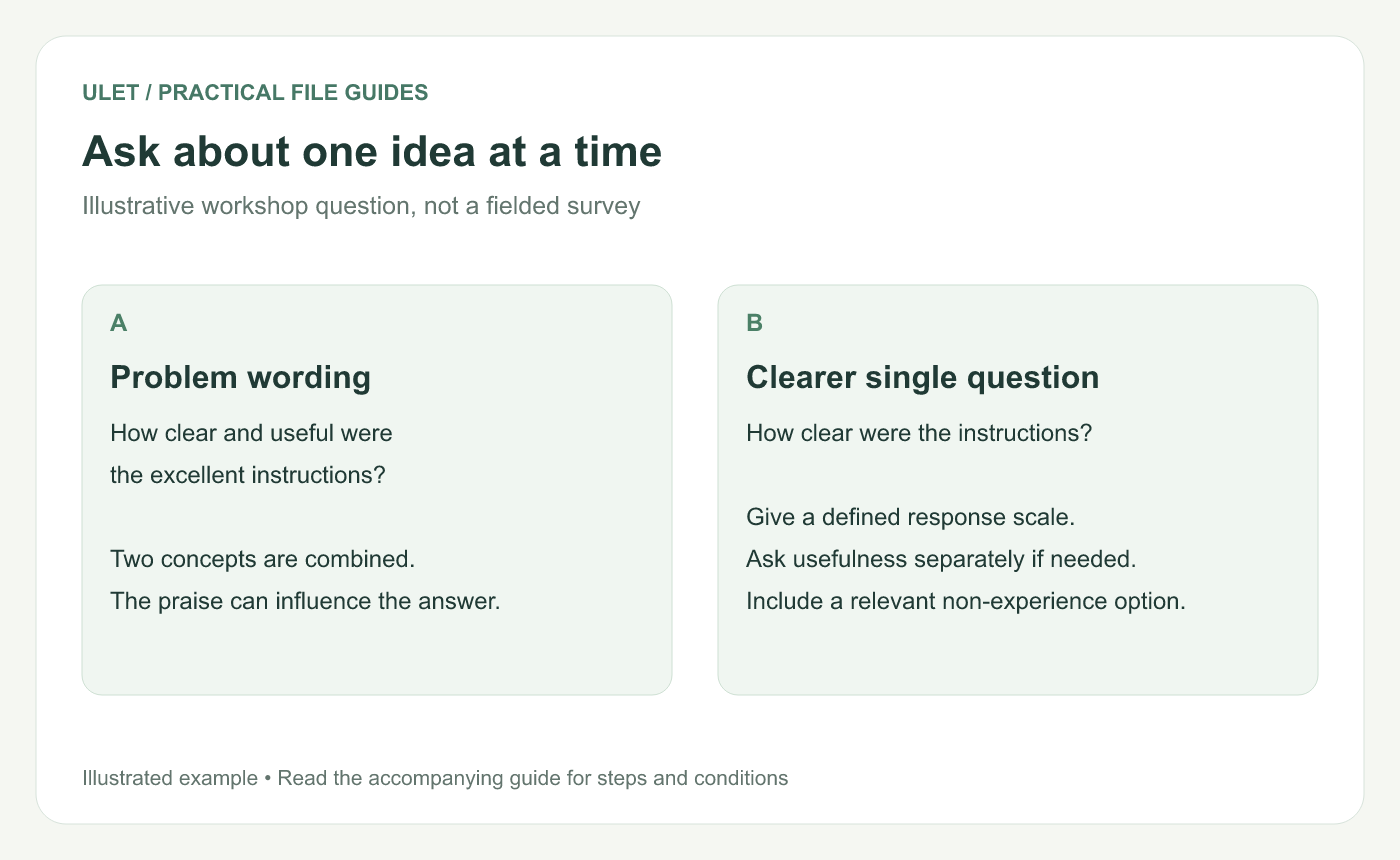
Ask about one idea at a time. Original instructional illustration; fictional examples are not software screenshots or measured product results.
Remove two questions hidden in one sentence
Consider the fictional workshop question “How clear and useful were the excellent instructions?” A respondent may find the instructions clear but not useful, and the word excellent supplies praise before the answer.
Ask “How clear were the instructions?” If usefulness matters too, ask it separately. Keep both tied to the experience you intend to measure.
Pew Research Center's question-writing guidance emphasizes clear, specific questions, one concept at a time and careful response options. Survey-question guidance.
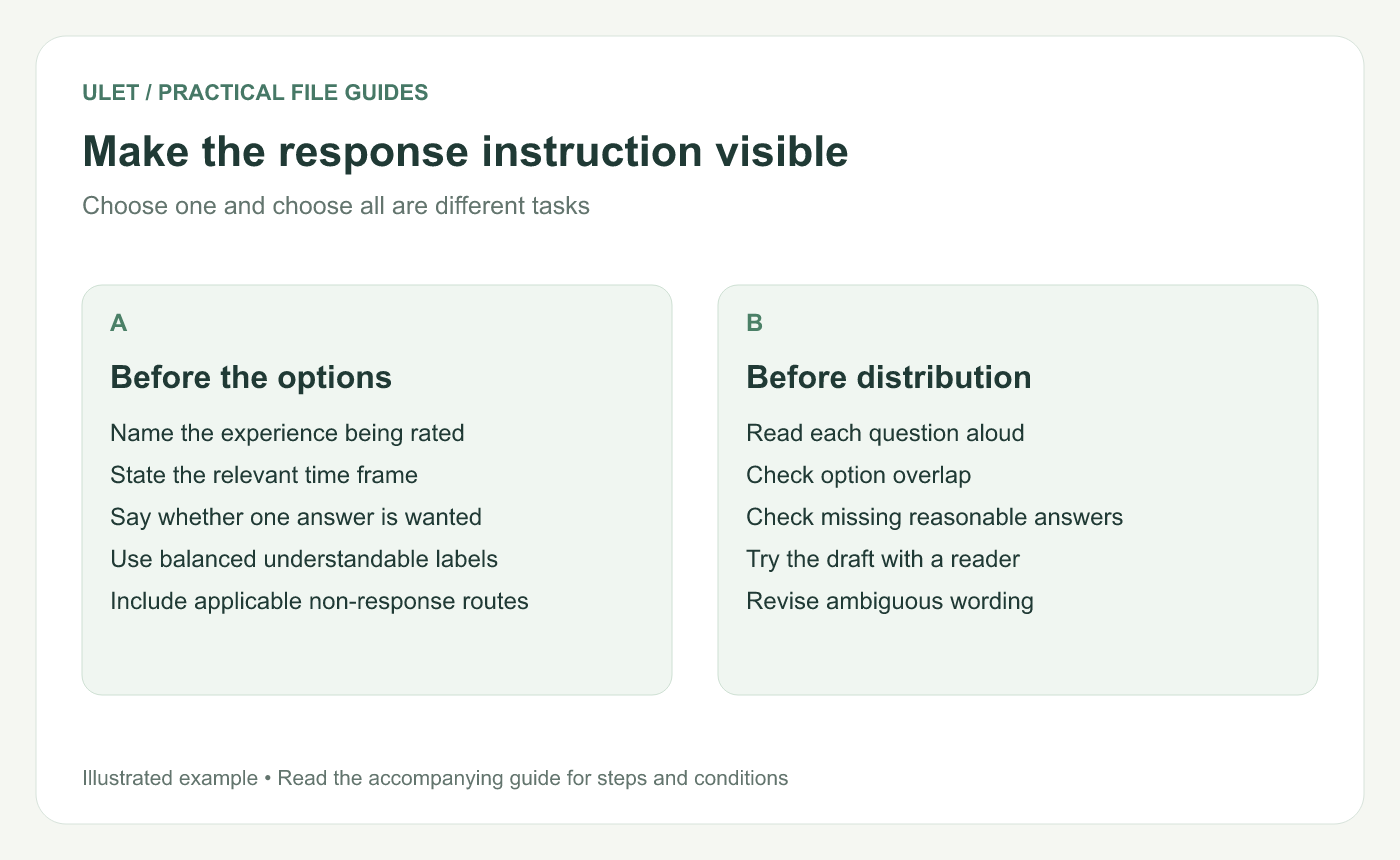
Make the response instruction visible. Original instructional illustration; fictional examples are not software screenshots or measured product results.
State how the reader should respond
For this illustrative clarity question, say “Choose one.” A draft scale could include Very clear, Somewhat clear, Neither clear nor unclear, Somewhat unclear, Very unclear, and Did not read the instructions.
Review whether those labels fit your actual purpose and audience. Do not treat an illustrative scale as a validated measurement instrument.
Check the options as a set
Check | Question for the author |
|---|---|
Overlap | Could one answer reasonably fit two options? |
Coverage | Is a reasonable response missing? |
Instruction | Is it clear whether one or several answers are allowed? |
Experience | Can someone without the relevant experience answer appropriately? |
Keep the response labels and question wording consistent across repeated questions. If measuring change over time, review whether a wording change would alter the comparison.
Try the draft with a reader
Ask a person from the intended audience to explain what each question means and how they chose an answer. Record confusion and revise before collecting responses.
A readability trial does not establish that the survey will produce representative results. Keep the wording review separate from sampling, collection and analysis decisions.
Prepare the collection copy
Check numbering, answer space and instructions in the format you will actually use. If transferring the draft into a survey tool, compare the final questions and options with the reviewed document.
Ulet provides free basic local document editing on Windows and macOS, so the questionnaire draft and review notes can stay together while the wording develops.


