
Create a Markdown weekly planner with a few outcomes, fixed commitments and specific work blocks. End the week by deciding what to carry forward instead of copying every unfinished line automatically.
Keep the plan short enough to review when the week changes. It is a working note, so leave room to adjust it when a dependency or meeting moves.
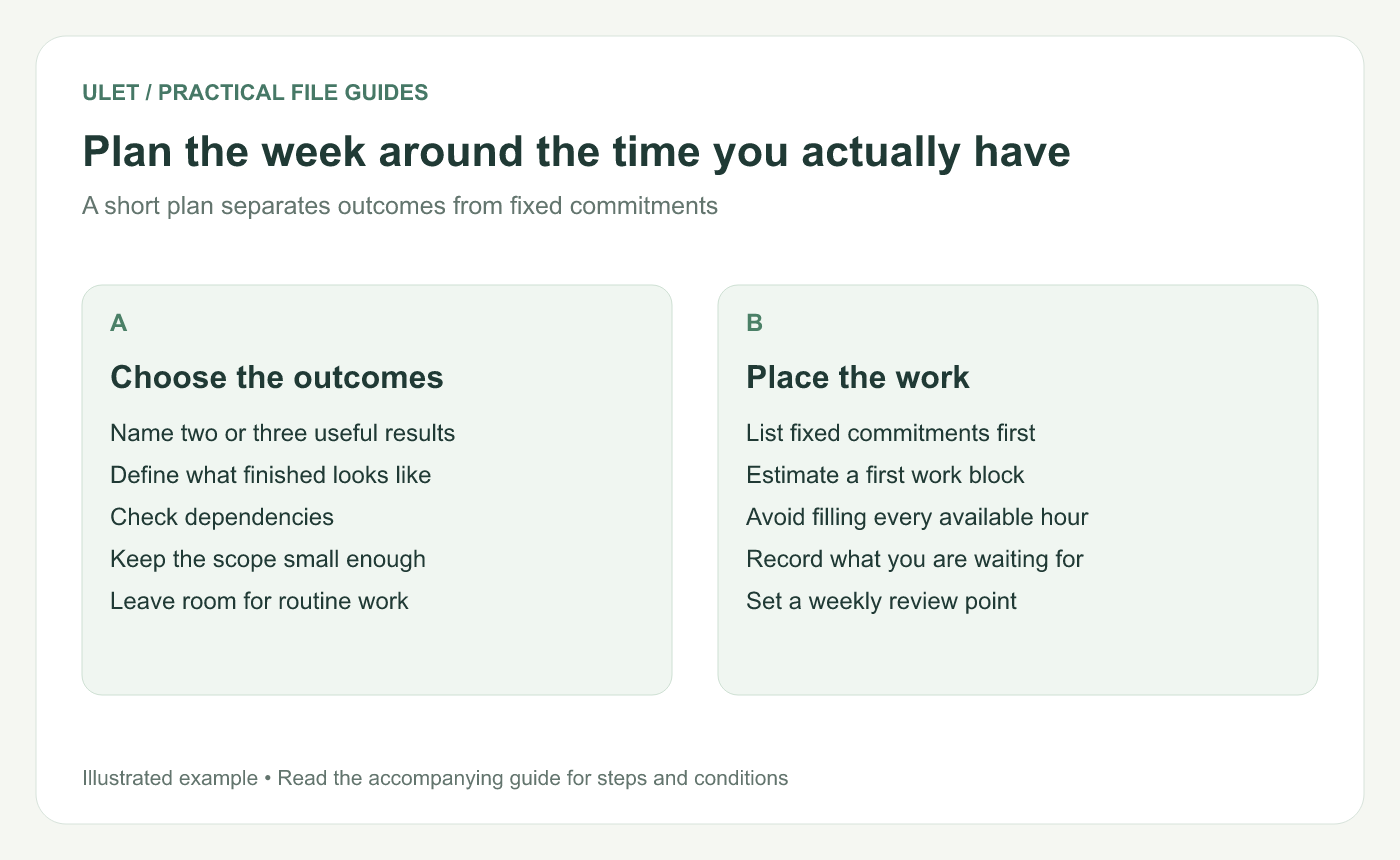
Plan the week around the time you actually have. Original instructional illustration; examples are not software screenshots or product test results.
Start with the calendar you already have
List fixed commitments before planning focused work. Account for routine responsibilities and leave some unassigned time rather than treating every open hour as available for a new task.
Choose two or three outcomes you can recognize as complete. “Send the checked brief” is clearer than “Work on writing.”
Copy a small sample week
# Week of 2026-11-09

## Outcomes
- Send the checked review brief.
- Resolve the missing source reference.

## Fixed commitments
- Tuesday: source review, 10:00–10:30
- Thursday: review meeting, 14:00–14:30

## Work blocks
- Monday: outline the brief — 60 minutes
- Wednesday: check figures — 45 minutes

## Waiting
- Source reference — owner: [name], follow up Tuesday

## Friday review
- Finished:
- Carry forward, with reason:
This is an illustrative plan for the week starting Monday, 9 November 2026. The times and tasks are examples. Replace them with actual commitments and the contact responsible for the missing reference.
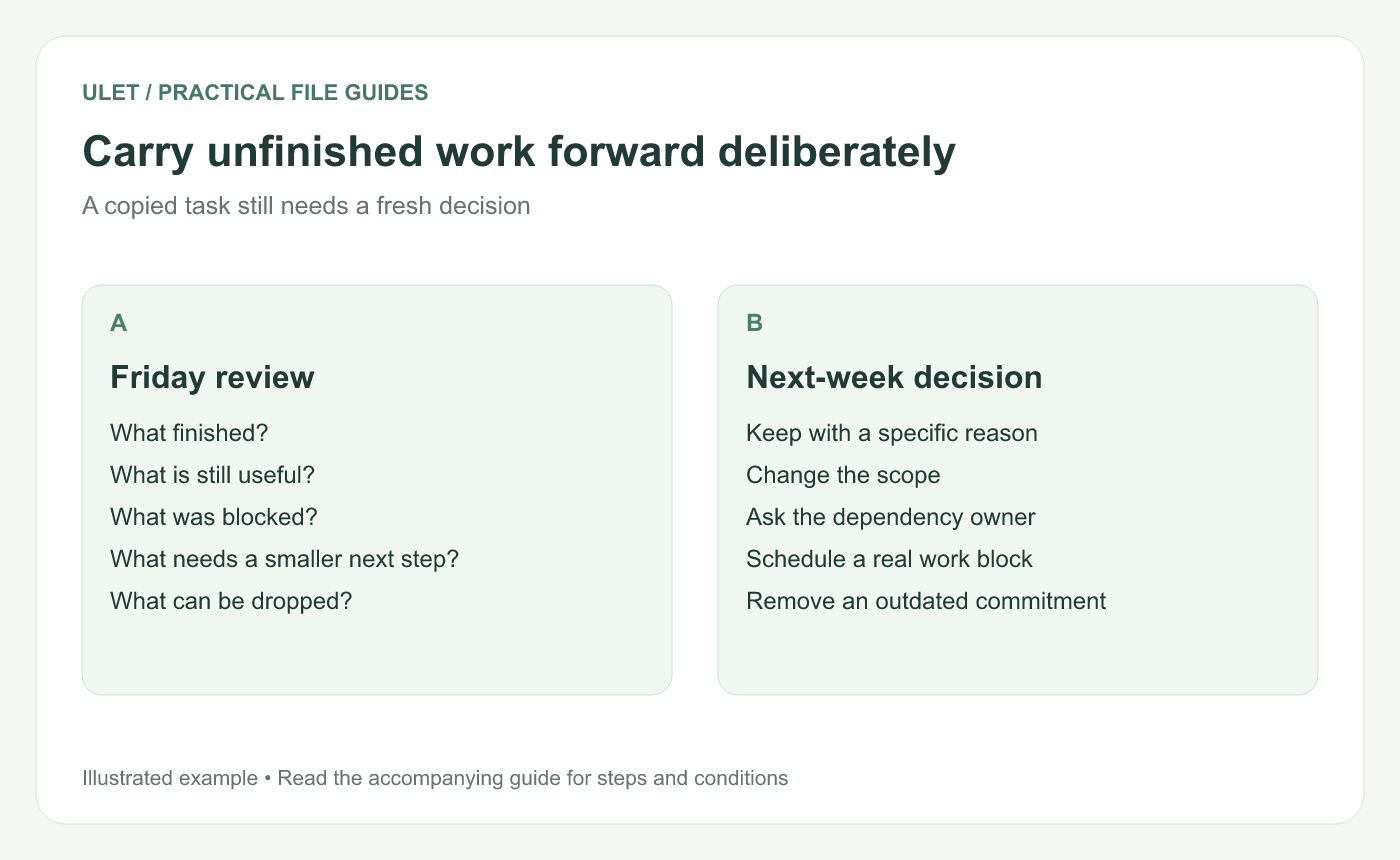
Carry unfinished work forward deliberately. Original instructional illustration; examples are not software screenshots or product test results.
Give a work block a clear first action
A 60-minute block for an outline can begin with “Write the section headings and list the evidence each needs.” That is easier to start than an unbounded task to finish the whole report.
If the next action depends on someone else, put it in Waiting with an owner and a follow-up point. Do not schedule a task as ready while its essential input is missing.
Update the plan when the facts change
When a meeting expands or urgent work arrives, remove or move something else. Leaving the original list untouched can hide the decision about what will no longer fit.
Use ordinary status words such as Planned, Done and Waiting if you need them. A plain bullet list is enough; interactive task-checkbox behavior is not required for this template.
Close the week with a decision
Record what finished and why important work remains open. For each unfinished item, decide whether to keep it, narrow it, unblock it or drop it.
When carrying an item forward, give it a fresh next action and a realistic place in the next week. A task that has moved repeatedly may need a smaller scope or a different commitment.
Ulet provides free local Markdown editing on Windows and macOS. Keep one clearly dated note per week, and use the previous review to inform the next plan.


